






A Guide to Selecting the Right Mirror for Your Space
A mirror is more than a functional object — it shapes light, expands space, and can add a quiet sculptural presence to an interior. Whether you’re selecting a living room mirror, a hallway mirror, or deciding on ideal mirror sizes for different rooms, choosing the right piece is an invitation to consider balance, rhythm, and atmosphere.
Many people begin by asking “What size mirror should I get for my room?,” or by trying to understand “What is the rule for mirrors regarding space?” both of which shape the foundation of choosing thoughtfully.
FRAMA’s mirror universe—including the CM-1 Circle Mirror, the RM-1 Rectangular Mirror, and the Symmetry Mirror—offers a quiet study in proportion and materiality. Each model explores scale and silhouette differently, allowing you to understand how mirror dimensions, mirror sizes, and mirror styles influence the feeling and function of a room.


1. Consider proportion
A mirror’s influence is determined first by scale. This is where questions like “Which mirror size is best?” and “What is the rule for mirror size?” become relevant. The CM-1 Circle Mirror—available in multiple diameters—is an example of how changing size alters the impact of a piece in a given room: the small version suits a quiet entryway, while the large creates the effect of a big room mirror or even a subtle focal point in a big bedroom mirror scenario.
The RM-1 Rectangular Mirror offers flexibility in orientation, illustrating how mirror shapes and mirror shape interact with architecture. A tall, narrow installation brings elegance to a corner, while a wide horizontal placement expands a wall’s perceived length.
Can a mirror be too big for a space? A mirror that dominates circulation or overwhelms furniture lines can disturb spatial calm. Yet when the proportions feel balanced, large mirrors can enhance an environment, even in modest rooms.



2. Explore shape
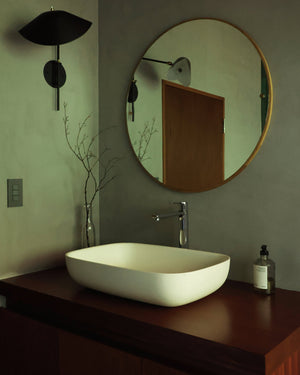
FRAMA’s CM-1 Circle Mirror offers a gentle presence—a curved form that complements interiors seeking softness. Its geometry contrasts with the sharper definition of the RM-1 Rectangular Mirror, which adds clarity to minimal spaces.
What shape mirror should I get? More expressive shapes prompt curiosity about shaped mirrors, such as an organic shape mirror, an irregular shape mirror, a diamond shape mirror, or an octagon shape mirror. These silhouettes evoke sculpture as much as function. Oval silhouettes remain timeless too—whether as an oval shape mirror for daily use or an oval shape mirror for bathroom inspiration (bathroom mirror size and bathroom mirror a common reference for oval or almond shape styles).


3. Find its place
Beyond size and shape, placement brings the design to life. How to choose the right mirror for your space? The answer depends on what the mirror captures. Avoid positioning mirrors where they reflect clutter, harsh lighting, or places meant for quiet privacy. Instead, let them return natural light, greenery, or architectural lines.
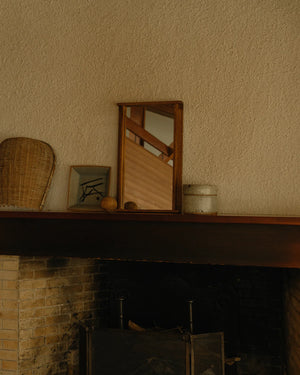
The Symmetry Mirror—with its subtle wood detailing and warm materiality—shows how a mirror can act as a soft visual anchor. It works beautifully whether you need a sculptural accent or a full size mirror for bedroom use.
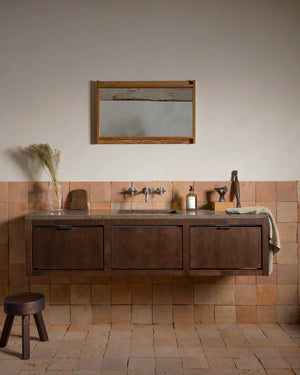



No matter your interior — whether you’re searching for a living room mirror, refining a hallway, or seeking harmony in a bedroom — understanding mirror dimensions, mirror sizes, mirror shapes, and thoughtful placement ensures a mirror that enhances the room with clarity, light, and spatial balance.
The process of choosing a mirror—whether circular, rectangular, or sculptural—is guided by proportion, placement, and intention. It’s natural to explore mirror styles, compare different mirror shapes, and consider how each piece participates in daily rituals.

FAQS–From FRAMA Community.
FRAMA Styling Guides are designed for your space. With an approach that values honest design and human connection, addressing the challenges of everyday living can be done with ease.
Whether a round or square mirror is better suited to your space depends on its context: a round mirror can soften a space and open up the feeling of standing inside, whereas a square mirror is a more linear aesthetic.
In the bedroom, select a mirror that is placed by flattering lighting—an important note in such an intimate space.
A mirror can be a valuable addition to any part of a home—as longs as its specific location is carefully selected to reflect its surroundings.